
When you visit your PCP or psychiatry office for depression, you are probably recommended an antidepressant and/or CBT. Unfortunately, that doesn’t always work, and we try various SSRIs or SNRIs and therapy modalities. Then, if the symptoms remain, we need more office-based treatments - like neuromodulation. This category can be expensive, but is always time-consuming. LOTS of office visits, which translate to time away from work or school and also family. With Flow FL-100, we get prescription brain stimulation that you can use AT HOME in your pajamas with your favorite movie on while you also doomscroll. What, you quit social media? Great, but you get my point. This can be a game changer for many people. It can be a first-line treatment, or you can add it later.
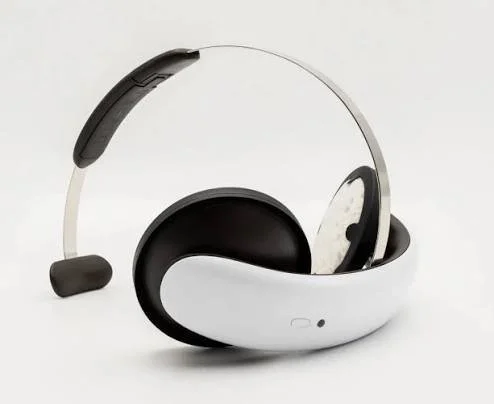
Flow 100 device has two forehead electrodes.
Flow FL-100 is a prescription headset that uses transcranial direct current stimulation, or tDCS, to treat major depressive disorder, MDD, in adults. According to the manufacturer’s FDA-approved indication, it may be used on its own or alongside antidepressant medication or therapy for adults with moderate to severe major depressive disorder who are not considered treatment-refractory. In other words, most depression can possibly benefit, but only vanilla depression has been studied and presented to the FDA as of now. Picture it like adding another medication without any drug interactions or trips to the pharmacy. Before you get too excited, there are caveats - mostly, it’s not covered by your insurance yet. But also, it’s like medication - it does not work for every patient. We still have a lot to learn about the different mechanisms that can lead to the syndrome we call MDD.
At Springhouse, I’m all about options. Let’s say your treatment is helping some, enough you don’t want to stop or switch. We can ADD Flow. Or if you are having side effects but the medication works; maybe Flow helps enough a lower dose is effective with fewer side effects. Every one of us is different and your depression is unique, so options help me match patients and treatment effectively.
Springhouse — “making life flow” —is fitting treatment into real life. Flow may be easier to work into your lifestyle than an office-based neuromodulation treatment because sessions are completed at home.
Frequently Asked Questions About Flow FL-100
What exactly is Flow?
Flow FL-100 is a prescription medical device worn across the forehead. It delivers a gentle electrical current using transcranial direct current stimulation, or tDCS. The goal is to influence activity in brain regions involved in depression.
Unlike medication, the treatment is delivered through the headset. The patient uses an accompanying smartphone app to connect to the device and guide treatment sessions.
Is Flow FDA approved?
Yes. The patient information supplied by Flow describes FL-100 as the first FDA-approved prescription tDCS device for at-home treatment of depression.
FDA approval does not mean that Flow is appropriate for everyone with depression. It remains a prescription treatment, and diagnosis, symptom severity, medical history, previous treatment response, and safety considerations still matter.
Who is Flow designed for?
Most adults with moderate to severe depression. The FDA-approved indication described in the product materials is for adults age 18 and older. It may be prescribed as a stand-alone treatment or as an addition to other depression treatments. Use with bipolar patients is off label and there is not evidence yet to guide those decisions.
Can I use Flow instead of taking an antidepressant?
We’ll talk about it. Flow is approved for use either as monotherapy or as an adjunctive treatment together with other depression treatments.
That does not mean someone who is already taking an antidepressant should simply stop it and substitute Flow. Medication changes should still be discussed with the prescriber.
Can I use Flow while I am in therapy?
Yes. Flow as an option that may be used alongside psychotherapy and/or antidepressant medication. Your therapy might even work better alongside Flow.
How much does Flow cost?
Currently, Flow is a self-pay treatment, so the initial cost can be substantial. However, you use the device repeatedly over a course of treatment and potentially beyond the initial treatment period.
When you consider the cost across individual treatment sessions, the per-session cost can be lower than many psychotherapy visits or office-based neuromodulation treatments.
What does a treatment session involve?
A standard treatment session lasts about 30 minutes. The initial phase begins with five sessions per week for the first three weeks, followed by three sessions per week for the next seven weeks.
Because the treatment is done at home, patients do not need to travel to an office for every stimulation session.
How quickly does it work?
The Flow patient materials report that improvement has been seen as early as about three weeks, although individual response varies. Clinical and real-world studies examined outcomes through ten weeks and beyond.
Any response or remission percentage from a study describes what happened in a group of patients. It cannot predict exactly how one individual will respond. So the results make me hopeful, but aren’t guaranteed.
Does Flow track symptoms?
Yes. Regular PHQ-9 depression questionnaires within the Flow app are used. You can view the results over time to assess change. This is standard practice with meds and talk therapy too.
What are the side effects?
The manufacturer reports that side effects observed in studies were generally mild and temporary. Reported effects include skin dryness, irritation or redness, headache, and stinging, burning, or itching at the stimulation site. Skin burns are also a potential risk, particularly if electrode pads are reused or allowed to dry out.
Who should not use Flow?
The supplied safety information says not to use the device over open wounds, broken or damaged skin at the electrode site, or metallic skull reconstruction at the electrode site. Pregnancy, epilepsy, and other conditions will often need planning but are not rule-outs.
Is at-home treatment really supervised?
At-home does not mean completely independent treatment. Flow is a prescription device. A clinician determines whether it is appropriate, prescribes it, and can follow symptoms and treatment response over time. The app directs patients in regular use according to clinician instructions. The device is simple to use and you can watch tv or scroll while it’s on.
Where I Think Flow May Fit
I rarely think about depression treatment as choosing one thing. A patient may be working on sleep, exercise, relationships and therapy while also taking medication—or using a treatment such as Flow. The mix depends on the person.
And Flow doesn’t magically replace therapy and meds. It gives us another tool, and for some people it may be a particularly practical one because the treatment happens at home. I expect more options and wider insurance coverage in the future for psychiatric options - so better and more accessible treatments for patients are coming! - but for today we have another option that might work out to be as affordable as your standard in-office treatments.
This article is for educational purposes and is not a substitute for an individualized psychiatric evaluation. Product efficacy and safety information is based on the Flow Neuroscience patient and clinician materials reviewed for this article. Individual outcomes vary.
References
Flow Neuroscience. Flow FL-100 Patient Leaflet.
Flow Neuroscience. Flow FL-100 Clinician Overview Guide. August 2026.
Woodham RD, Selvaraj S, Lajmi N, et al. Nature Medicine. 2024.
Woodham RD, Selvaraj S, Lajmi N, et al. Journal of Psychiatric Research. 2025;186:23–32.